Patios Built for Actual Daily Use
Patio Paver Installation in Statesville for homeowners who need outdoor gathering spaces that handle furniture, weather, and foot traffic
Paver patios provide stable, level surfaces where families cook outdoors, arrange seating groups, and spend evenings outside without dealing with cracked concrete, uneven flagstone, or muddy ground. Cornerstone Home & Hardscapes designs and installs custom paver systems in Statesville that hold up under grills, fire pits, and patio furniture while managing water runoff and maintaining their appearance through years of sun exposure and temperature swings. The installation process involves excavating the patio footprint to depth, building a compacted base that won't settle, laying pavers in your chosen pattern, and filling joints with polymeric sand that locks units together and resists weed growth.
Paver systems outperform poured concrete in residential applications because individual units flex slightly with ground movement rather than developing the stress cracks that appear in monolithic slabs, damaged pavers can be removed and replaced without affecting surrounding areas, and the permeable joints allow some water infiltration that reduces runoff. The variety of colors, shapes, and patterns available means your patio can match your home's architecture or create visual contrast that defines the outdoor space.
Schedule a free estimate to review layout options and determine which paver styles work with your existing landscape and intended use.
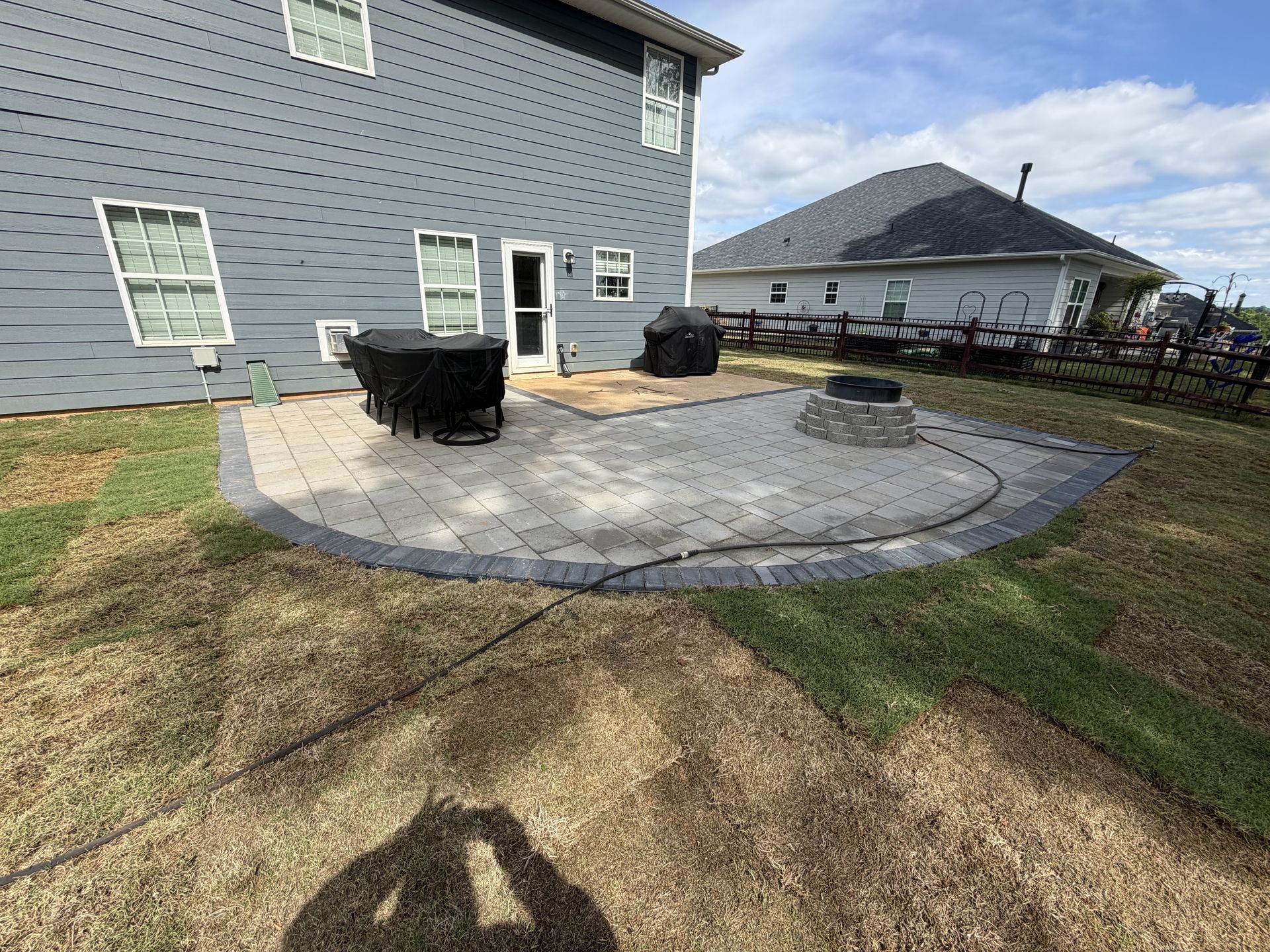
A properly installed paver patio creates a permanent outdoor room with defined edges, consistent elevation, and drainage that moves water away from your home's foundation. The base consists of compacted crushed stone in layers, with each lift tamped to density before the next layer goes down. A one-inch sand bed on top of the base allows for fine-tuning each paver's elevation, and edge restraints around the perimeter prevent lateral spreading that would open joints and create tripping hazards over time.
Once complete, you'll notice rainwater sheets across the paver surface and drains through joints rather than pooling in low spots, furniture legs rest solidly without sinking or tipping, and the surface remains level season after season because the compacted base distributes loads evenly. Corners and edges stay crisp where pavers meet lawn or planting beds, and the color you select when new will fade only slightly over years of sun exposure because quality pavers use pigments throughout the unit rather than surface coatings that wear away.
Design options include contrasting border patterns that frame the main field, circular or curved layouts that soften geometric yards, and integration with existing hardscaping such as walkways or steps. Commercial properties use paver patios for outdoor seating areas where durability and appearance both matter, though residential installations make up most projects. The low-maintenance nature of paver systems means occasional sweeping and joint sand top-up every few years, with no sealing or resurfacing required unless you want to refresh color.
Answers Homeowners Need Before Installation
Residents considering paver patios want to know how these systems will perform compared to other options and what the installation disrupts.
What makes pavers more durable than stamped concrete for patios?
Individual paver units move independently with minor ground shifts and freeze-thaw cycles without cracking, while stamped concrete is a single slab that develops stress cracks when the base settles unevenly or temperatures cause expansion and contraction.
How does base preparation affect whether the patio stays level over time?
Excavation to proper depth and compaction of base material in lifts creates a stable platform that resists settling, while inadequate base thickness or insufficient compaction allows voids to collapse under load and creates the low spots where water pools and pavers sink.
When should a patio include retaining walls or steps?
Any time the patio site has more than six inches of grade change between the door threshold and the desired patio elevation, steps or terracing become necessary to manage the transition safely and prevent soil from eroding into the paved area.
What layout patterns work best for different patio sizes in Statesville?
Smaller patios benefit from simple running bond or herringbone patterns that don't create visual clutter, while larger spaces can accommodate circular accents, contrasting borders, or complex geometric designs that define activity zones within the overall patio.
How long does paver installation typically take for a standard residential patio?
Most projects between two hundred and four hundred square feet require five to seven working days from excavation through final joint sand application, with timeline affected by site access, base conditions, and weather that delays compaction or paver setting.
Cornerstone Home & Hardscapes works with homeowners and businesses to create paver patios customized for outdoor entertaining and everyday enjoyment, with professional installation that addresses the base preparation and drainage details determining long-term performance. The company provides free estimates that include layout options, material selections, and site-specific recommendations. Reach out to discuss your project and arrange a consultation.
Complete Backyard Transformations With Custom Paver Patios
A new patio can completely change how you use your backyard, but the best outdoor spaces often require more than a paver installation alone.
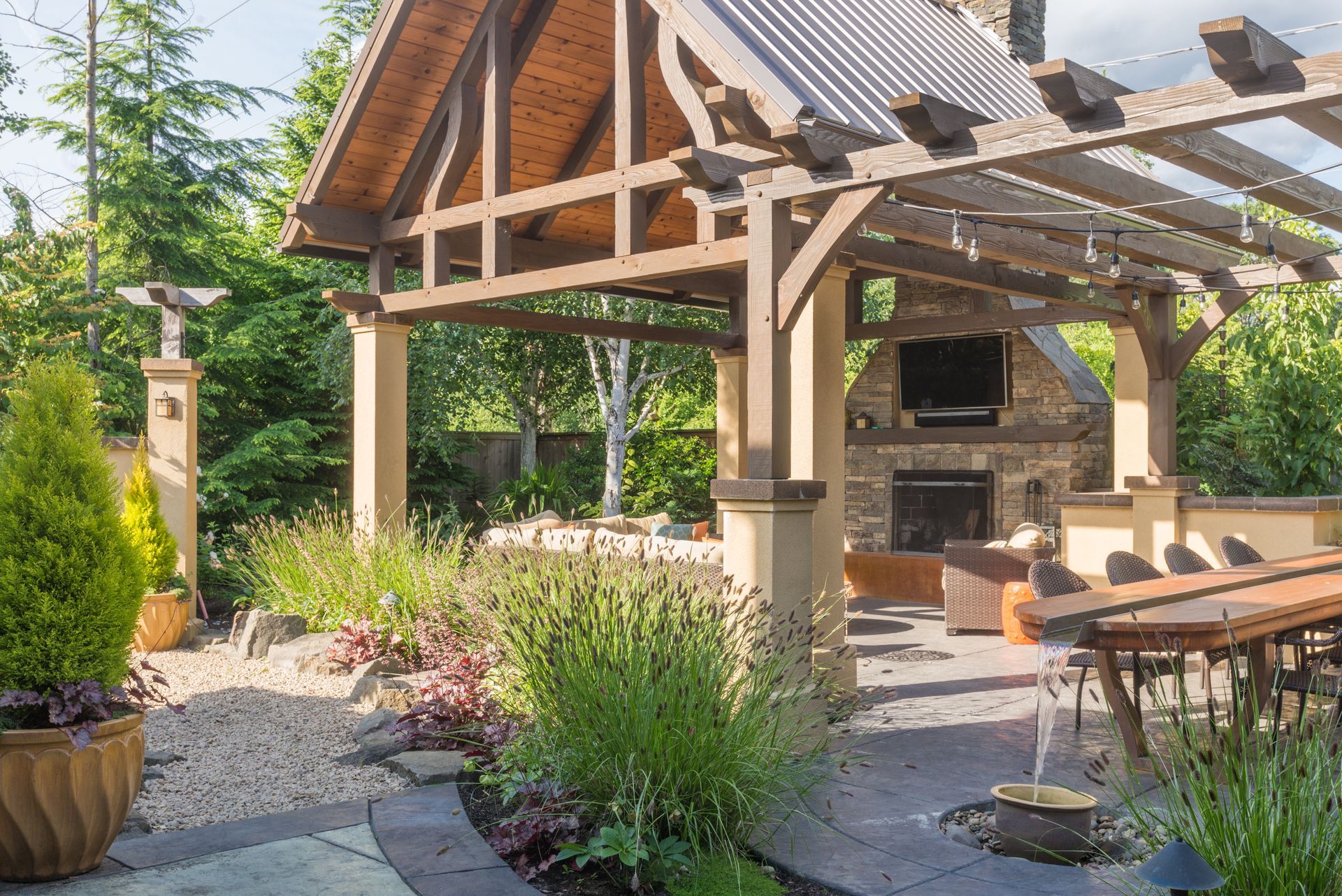
At Cornerstone Home & Hardscapes, we approach patio projects as part of a complete outdoor living transformation. That means we can bring together custom paver patios, retaining walls, drainage solutions, landscaping, walkways, and other hardscape elements into one cohesive design.
Instead of coordinating multiple contractors for separate parts of your backyard, our team can help create a unified outdoor space where every element works together. A new concrete paver patio can provide the foundation for an outdoor seating area, while retaining walls can address elevation changes, drainage can help protect the property, and landscaping can soften the hardscape and complete the finished look.
Whether you are starting with an unused section of your yard or completely redesigning an existing outdoor space, Cornerstone can help turn your backyard into a functional, attractive area designed around the way you want to live outdoors.
Our patio paver installation projects can incorporate a variety of complementary improvements depending on your property, goals, and existing landscape. A typical backyard transformation may include:
- Custom paver patios designed for dining, entertaining, lounging, or outdoor kitchens
- Concrete pavers available in different colors, patterns, textures, and styles
- Natural stone and other hardscape materials for a more organic or distinctive appearance
- Retaining walls to create usable levels, define planting areas, and address changes in elevation
- Drainage solutions to direct water away from patios, structures, and problem areas
- Walkways and connecting paths that create a natural flow between outdoor spaces
- Landscape installation to add plants, planting beds, and greenery around the hardscape
- Edging and finishing details that give the completed project a polished appearance
The goal is not simply to install a patio. It is to create an outdoor environment where the hardscape, landscaping, grading, and drainage all work together.
Our Backyard Transformation Process
Every property presents different opportunities and challenges, so we begin by understanding how you want to use your outdoor space. From there, we can develop a project that balances appearance, functionality, and the characteristics of your property.
1. Property and Project Consultation
We start by discussing your goals, preferences, and priorities for the backyard. We consider factors such as how you plan to use the space, existing landscaping, elevation changes, drainage concerns, and the overall style you want to achieve.
2. Outdoor Space Design
The patio is considered as part of the larger landscape rather than as an isolated feature. We can plan the placement of pavers, retaining walls, walkways, planting areas, and other hardscape elements so the finished project feels intentional and connected.
3. Material Selection
Material selection plays an important role in the finished appearance of your outdoor living space. Depending on the design, we may incorporate concrete pavers, natural stone, retaining wall materials, and complementary landscape materials. We help create a combination that fits your home's style and the look you want for your backyard.
4. Site Preparation and Installation
Proper preparation is essential for a durable paver patio. The installation process may include preparing the site, establishing the appropriate base, addressing grading and drainage, installing the pavers and other hardscape features, and completing the surrounding landscape work.
5. Complete the Transformation
Once the major hardscape elements are installed, landscaping and finishing details can bring everything together. The result is a backyard designed as one cohesive outdoor living environment instead of a collection of disconnected improvements.
Paver Patio Installation for Statesville, Mooresville & Charlotte-Area Homeowners
Cornerstone Home & Hardscapes helps homeowners throughout Statesville, Mooresville, Charlotte, and surrounding communities create outdoor spaces that are designed for both everyday enjoyment and entertaining.
If you are considering a new paver patio, think beyond the patio itself. Your project may be the opportunity to improve the entire backyard with complementary retaining walls, drainage, landscaping, walkways, and other hardscape features.
Cornerstone can help transform an underused backyard into a cohesive outdoor living space built around your home's layout, your property, and the way you want to use your yard.
Build More Than a Patio
A professionally installed paver patio can be the starting point for a much larger backyard transformation. Whether you need a defined entertaining area, better use of a sloped yard, improved drainage, additional landscape space, or a complete outdoor living redesign, Cornerstone Home & Hardscapes can bring the individual pieces together into one cohesive project.
Ready to transform your backyard? Contact Cornerstone Home & Hardscapes to discuss your patio, hardscape, and outdoor living project in Statesville, Mooresville, Charlotte, and the surrounding area.