Beds That Hold Moisture and Block Weeds
Mulching Services in Statesville for landscape beds needing weed suppression, moisture retention, and refreshed appearance
Bare soil in landscape beds dries out quickly during summer heat, allows weed seeds to germinate freely, and erodes during heavy rain. Fresh mulch solves these problems by creating a protective layer that moderates soil temperature, keeps moisture from evaporating too fast, and prevents most weed seeds from reaching sunlight needed for germination. Cornerstone Home & Hardscapes applies mulch to landscape beds around homes and commercial properties in Statesville, using proper depth and edge definition to deliver both functional benefits and immediate visual improvement.
Mulch installation begins with preparing bed edges so mulch stays contained rather than washing into grass or driveways, then spreading material evenly to a depth that suppresses weeds without smothering plant roots. Hardwood mulch breaks down over time and adds organic matter to soil, dyed mulch maintains color longer without fading to gray, and pine bark options provide a coarser texture that resists compacting in wet conditions.
Request a free estimate for mulch installation based on your total bed area and preferred mulch type.
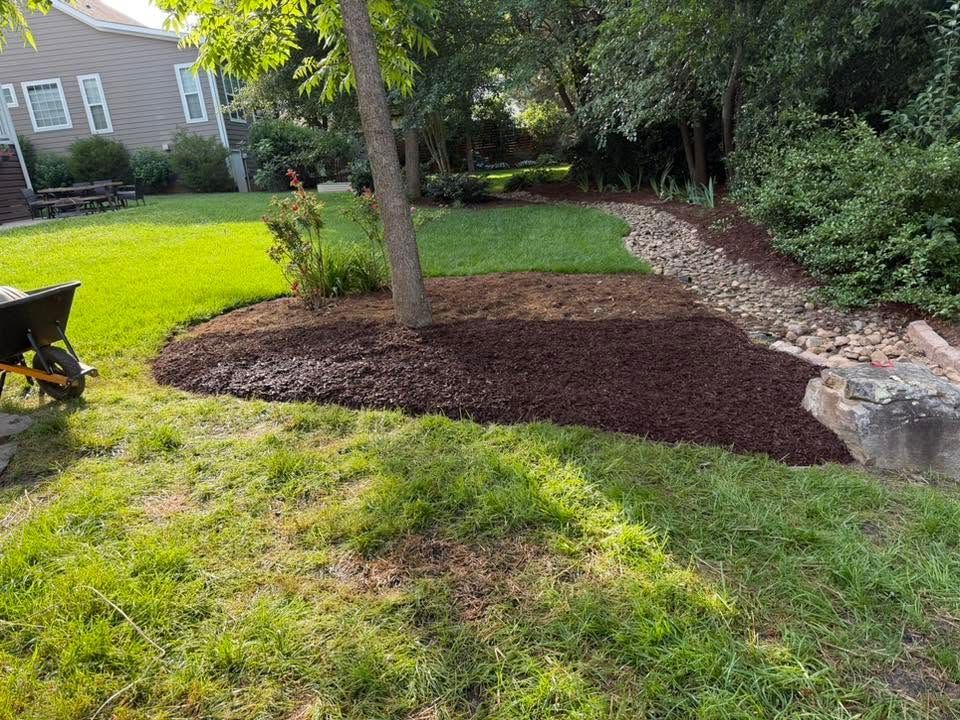
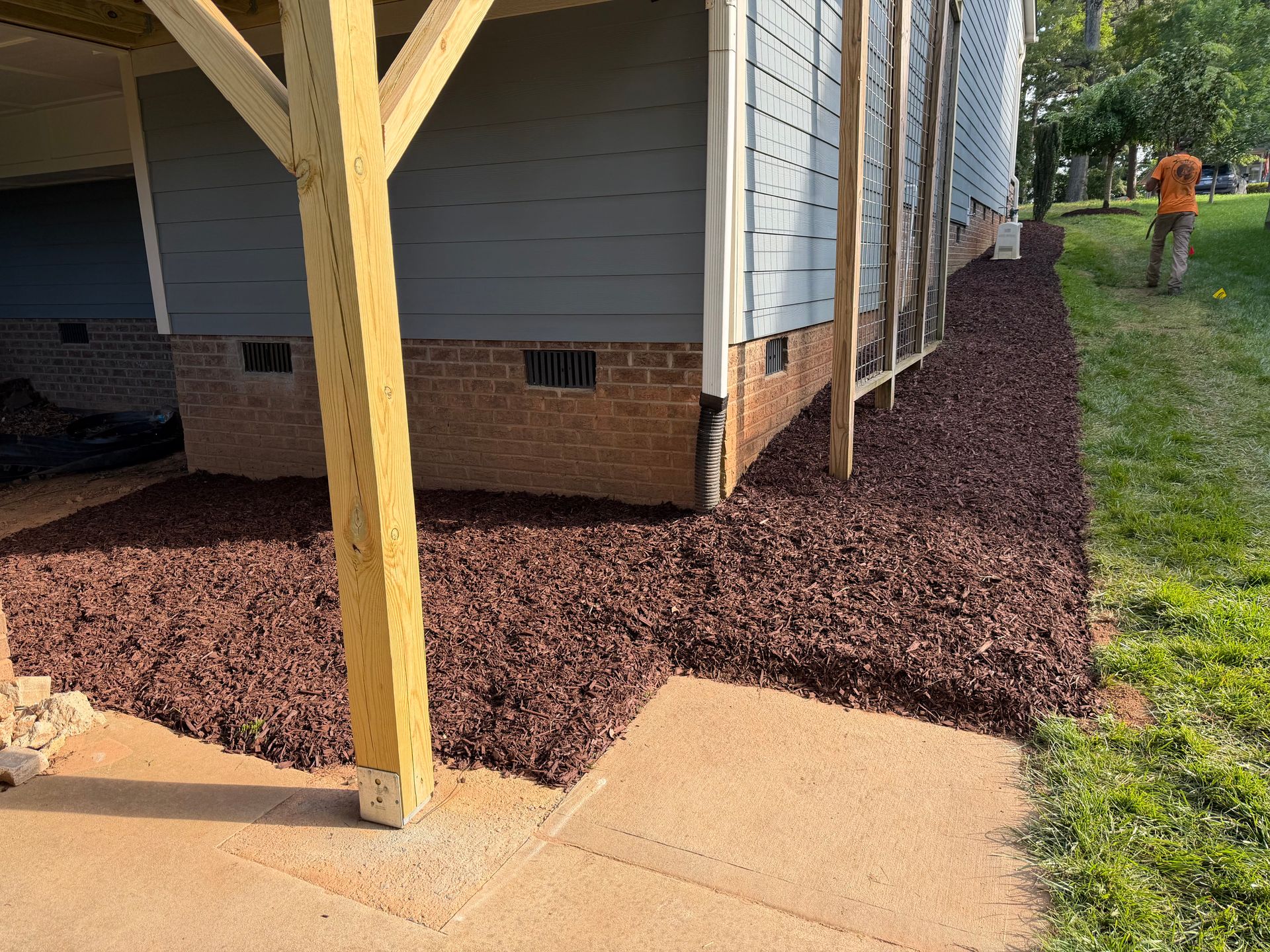
Professional mulch application means beds look uniform and tidy, with consistent depth across the entire area and clean edges that separate planted areas from lawns or hardscapes. Mulch should sit two to three inches deep—thick enough to block light from reaching weed seeds but not so deep that it holds excessive moisture against plant stems and causes rot. The material gets spread evenly rather than piled high around tree trunks or shrub bases, which traps moisture and invites disease or insect problems.
After mulching, your landscape beds appear refreshed and well-maintained, with rich color that contrasts against green foliage and provides visual definition to planting areas. Weeds become noticeably less frequent because most seeds can't push through the mulch layer to reach sunlight, and the soil underneath stays cooler and moister through summer dry spells, reducing the need for constant watering.
Mulch needs replenishment every one to two years as it decomposes and settles, losing thickness and weed-blocking effectiveness. The timing depends on mulch type—fine hardwood mulch breaks down faster than coarse pine bark, and dyed mulches may need refreshing when color fades even if depth remains adequate for weed control.
What Property Owners Usually Ask
Questions about mulch often focus on material choices, proper application methods, and how mulching affects plant health and maintenance requirements.
What's the difference between hardwood mulch and pine bark?
Hardwood mulch is ground finer, decomposes faster to enrich soil, and costs less per yard, but it also fades to gray more quickly and needs replacing more often. Pine bark has a coarser texture, maintains its appearance longer without re-dyeing, and resists compacting into a dense mat that repels water.
How deep should mulch be applied in landscape beds?
Two to three inches provides effective weed suppression and moisture retention without creating problems. Mulch deeper than four inches can suffocate plant roots by limiting oxygen exchange, and mulch piled against tree trunks or shrub stems holds moisture that causes bark rot and disease.
When is the best time for mulch installation in Statesville?
Spring application before summer heat arrives gives plants maximum benefit during the growing season. Fall mulching provides winter insulation for roots and prevents soil erosion during winter rains, but spring timing delivers more immediate visual impact when curb appeal matters most.
Why does old mulch fade to gray?
Most natural wood mulches lose color as sun exposure breaks down lignin, the compound that gives wood its brown tone. Dyed mulches resist fading longer because colorants penetrate the wood, but even treated mulch eventually lightens as the surface layer weathers.
How does mulch affect watering needs?
The insulating layer reduces evaporation from soil surfaces, meaning plants need less frequent watering to maintain healthy moisture levels. During summer drought, mulched beds stay moist several days longer than bare soil, reducing irrigation costs and plant stress.
Cornerstone Home & Hardscapes delivers professional mulch installation with clean application and customized recommendations for your landscape conditions. Reach out for an estimate to refresh your beds and reduce ongoing landscape maintenance.