Frequently Asked Questions
What's the difference between concrete block retaining walls and other types?
Concrete block retaining walls offer superior durability and structural strength compared to timber or stacked stone options. Blocks interlock for stability, resist rot and insect damage, and handle North Carolina's clay soil expansion better than wood alternatives. They also provide design flexibility with various textures and colors while requiring minimal maintenance over decades.Why does drainage matter so much in retaining wall installation?
Without proper drainage, water pressure builds behind the wall and causes failure through cracking, leaning, or collapse. Statesville's clay soil retains moisture and expands when saturated, increasing hydrostatic pressure. Quality installations include gravel backfill and weep holes to redirect water away from the structure and prevent costly repairs.How do paver patios hold up compared to poured concrete?
Paver systems resist cracking because individual units flex independently during ground movement, unlike monolithic concrete slabs that crack under stress. If a paver breaks or stains, you replace individual units rather than demolishing entire sections. They also drain better through joints, preventing standing water that damages solid concrete surfaces over time.What layout and color options work best for custom paver patios?
Pattern choices include herringbone for high-traffic areas, running bond for elongated spaces, and circular designs for focal points. Color selection depends on surrounding materials—earth tones complement brick homes while grays match modern architecture. Mixing sizes creates visual interest, and border courses define edges while preventing paver migration at perimeters.Can hardscaping actually increase property value in Statesville?
Quality hardscaping adds functional outdoor living space that buyers actively seek, particularly in residential markets where outdoor entertaining drives purchase decisions. Professionally installed patios, walkways, and retaining walls improve curb appeal immediately and demonstrate property care. Well-designed hardscaping typically returns 60-80% of investment at resale while providing years of use before sale.What causes irrigation systems to fail and need repair?
Sprinkler heads crack from lawn equipment impact or freeze damage, valves stick from sediment buildup, and underground lines break due to root intrusion or ground settling. Controllers malfunction from power surges or moisture infiltration. Regular system checks catch leaks before water waste becomes significant and identify pressure issues that cause uneven coverage.How does proper concrete preparation prevent cracking and settling?
Base preparation determines concrete longevity—compacted gravel creates drainage and stable support that prevents slab movement. Proper thickness for intended use, control joints placed strategically, and adequate reinforcement all reduce crack risk. Rushing curing time or pouring on unstable ground causes premature failure regardless of concrete quality.When should you schedule bush trimming for healthy growth?
Trimming timing depends on plant type—spring bloomers get shaped after flowering ends, while summer bloomers are trimmed in late winter before growth starts. Most shrubs benefit from maintenance trimming in early spring and again in mid-summer to control size. Avoid heavy pruning during fall because new growth won't harden before winter.Why does mulch need refreshing even when it looks okay?
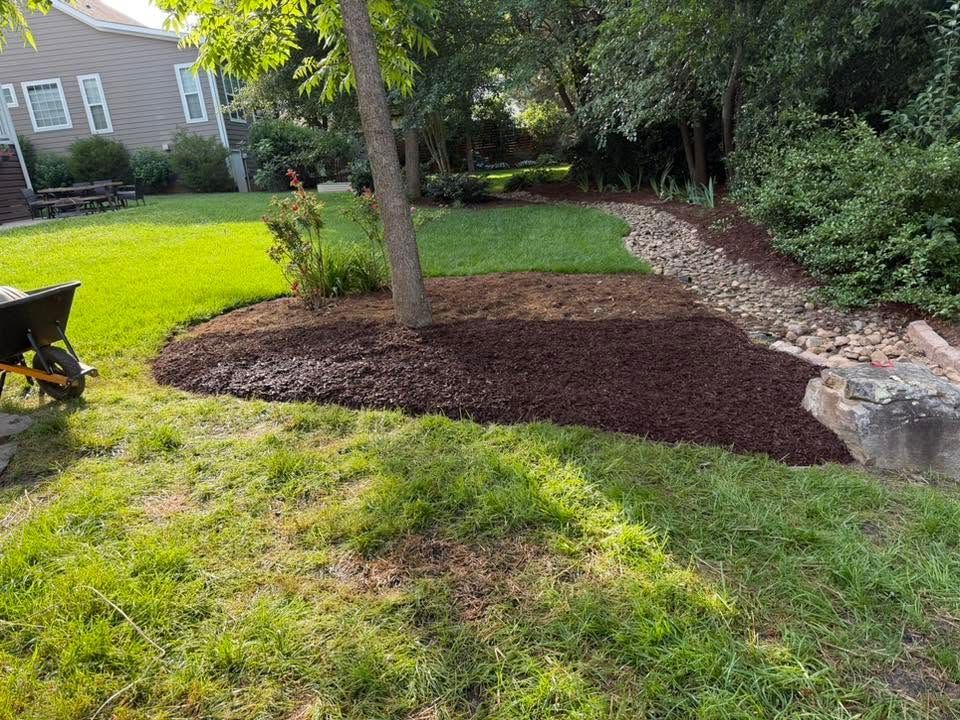
Mulch breaks down continuously through decomposition, losing thickness and weed suppression capability before color fades noticeably. A 3-inch layer compacts to under 2 inches within a year, exposing soil and allowing weed seeds to germinate. Fresh mulch also restores moisture retention that diminishes as organic material decays into soil.What makes a tree hazardous enough to require cutting?
Dead or dying trees with visible decay, hollow trunks, or large dead branches pose strike risks during storms. Trees leaning toward structures, those with root damage from construction, and species with weak wood like Bradford pear become dangerous as they mature. Cracks in major limbs or trunks indicate structural failure that worsens rapidly.How does clay soil in Statesville affect hardscaping projects?
Clay expands when wet and contracts during dry periods, creating ground movement that shifts pavers and cracks concrete if base preparation isn't adequate. Proper hardscaping in clay requires deeper excavation, thicker gravel base layers, and compaction in lifts to create stable support. Drainage becomes critical because clay sheds water poorly and stays saturated longer.What should you look for when choosing fence materials for durability?
Material choice affects lifespan dramatically—pressure-treated wood resists rot for 15-20 years, vinyl never needs painting but can crack in extreme cold, and aluminum withstands weather indefinitely but dents from impact. Consider maintenance willingness, local climate exposure, and purpose. Privacy fencing needs different construction than decorative boundary marking or pool enclosures.Do you handle both hardscaping and landscaping in the same project?
Yes — Cornerstone handles full outdoor transformations that combine hardscaping (patios, retaining walls, concrete work) and landscaping (plantings, mulching, irrigation) in a single project. Coordinating both trades means cleaner results, fewer scheduling headaches for you, and a finished yard that works together as a whole. We serve Statesville, Mooresville, Huntersville, and surrounding Iredell County communities.Who handles complete backyard transformations — both hardscape structures and landscaping — in the Statesville area?
Cornerstone Home & Hardscapes handles complete outdoor projects across Statesville and Iredell County, covering everything from structural hardscaping like patios and retaining walls to landscaping work like plantings, mulching, and irrigation. Having one company manage both sides of a project keeps the work coordinated and the results consistent.Is it better to hire one company for both hardscaping and landscaping or use separate contractors?
Hiring one company for both means your hardscape structures and landscape elements are designed and installed to work together from the start, reducing miscommunication, scheduling conflicts, and gaps in accountability. When separate contractors work the same yard, grading, drainage, and planting decisions can easily conflict with each other.What is the right order to complete hardscaping and landscaping work in a backyard renovation?
Hardscaping always comes first — retaining walls, patios, and grading should be finished before any planting or lawn work begins. Installing structures after plants are in place risks damaging roots, compacting soil, and undoing finished landscaping. Completing the hardscape phase first also defines the exact areas where soil, mulch, and plantings will go.How do you plan for drainage and grading before installing a patio or retaining wall?
Drainage and grading are evaluated before any material is ordered or ground is broken, because poor water management is the leading cause of patio settling and retaining wall failure. The slope of the land, soil type, and where runoff will exit the property all factor into the plan. Addressing these conditions upfront protects the finished structure for the long term.Can you handle a complete backyard transformation — patio, retaining wall, and landscaping — as one project in Statesville?
Yes, Cornerstone Home & Hardscapes manages the full scope of a backyard transformation — from retaining walls and custom paver patios to grading, drainage, and landscaping — as a single coordinated project. Working with one contractor across all phases keeps the timeline tighter, eliminates hand-off gaps between trades, and ensures every element is designed to work together.What makes a hardscaping and landscaping contractor the right choice for a large outdoor living project near Charlotte?
The right contractor for a large outdoor living project handles every phase — site grading, drainage, hardscape installation, and landscaping — without subcontracting the work out piecemeal. End-to-end project management means a single point of accountability, consistent quality across scopes, and a design where the patio, retaining walls, and plantings function as one cohesive outdoor space.